How to Write Restaurant Menu Descriptions That Make Guests Want to Order
A good menu description does not need to be long or packed with adjectives. Learn how to turn real ingredients and preparation into short copy that helps guests picture the dish and choose.
A guest opens the menu and sees:
“Grilled chicken with rice and salad — $14.90.”
It is accurate. But it can also be a missed opportunity.
A menu description is one of the few places where a restaurant can explain, in a handful of words, why a dish deserves attention. It can reveal ingredients, preparation, texture, provenance, or a small house detail that the dish name alone cannot communicate.
The common mistake is to fall into one of two extremes: descriptions so short that they add nothing, or paragraphs full of adjectives that sound like advertising.
The better approach is in the middle: describe what is true, specific and useful to the guest’s decision without turning every dish into an essay.
A simple formula
For most restaurants, start with:
hero ingredient + preparation + sensory detail + side or differentiator
Examples:
Grilled salmon with lemon butter, herb rice and roasted tomatoes.
Herb-marinated chicken, flame-grilled and served with mashed potatoes.
You do not need every element every time. The formula is a starting point.
Start with what the guest needs to know
Compare:
Pasta with shrimp.
with:
Tagliatelle with sautéed shrimp, cherry tomatoes and lemon sauce.
The second version answers the better question: what am I actually getting?
Use real preparation methods
“Chicken with sauce” is generic. “Grilled chicken with herb sauce” creates a clearer expectation.
Words such as grilled, roasted, toasted, smoked, braised, caramelized, breaded and sautéed can communicate real information.
Do not use a sophisticated technique just because it sounds impressive. If the kitchen does not actually use it, do not put it on the menu.
Choose one or two sensory details
Do not stack adjectives. Choose the detail that genuinely differentiates the dish: crispy, creamy, smoky, citrusy, spicy, buttery or toasted.
Compare:
Delicious, amazing artisan burger with special cheese.
with:
Flame-grilled beef burger, aged cheese, caramelized onions and garlic mayo.
The second version lets the food do the selling.
What to avoid
Empty adjectives
“Delicious,” “amazing” and “special” do not tell the guest much.
Instead of:
Delicious house dessert special.
Try:
Dark chocolate brownie with warm ganache and vanilla ice cream.
Repeating the dish name
If the item is called “Cheeseburger with fries,” use the description to explain what the name does not:
Brioche bun, beef patty, creamy cheddar, pickles and house sauce.
Exaggerating provenance
“Premium,” “artisan,” “local” and “imported” should only appear when they are true. A menu description is a promise.
Writing a paragraph
Guests are reading a menu, not an article. For many restaurants, one or two short lines are enough. Around 15–35 words is a useful starting range.
Practical examples
Lunch plate: Grilled chicken breast with garlic rice, black beans and mixed greens with house vinaigrette.
Pasta: Penne with roasted tomato sauce, fresh basil and grated Parmesan.
Burger: Flame-grilled beef burger, cheddar, caramelized onions and smoked mustard sauce on a brioche bun.
Dessert: Vanilla custard with salted caramel and toasted almonds.
Vegetarian: Grain bowl with grilled vegetables, lemon hummus and fresh herbs.
None of these descriptions needs to say the food is wonderful. Specific information creates the mental picture.
Write for the screen when the menu is digital
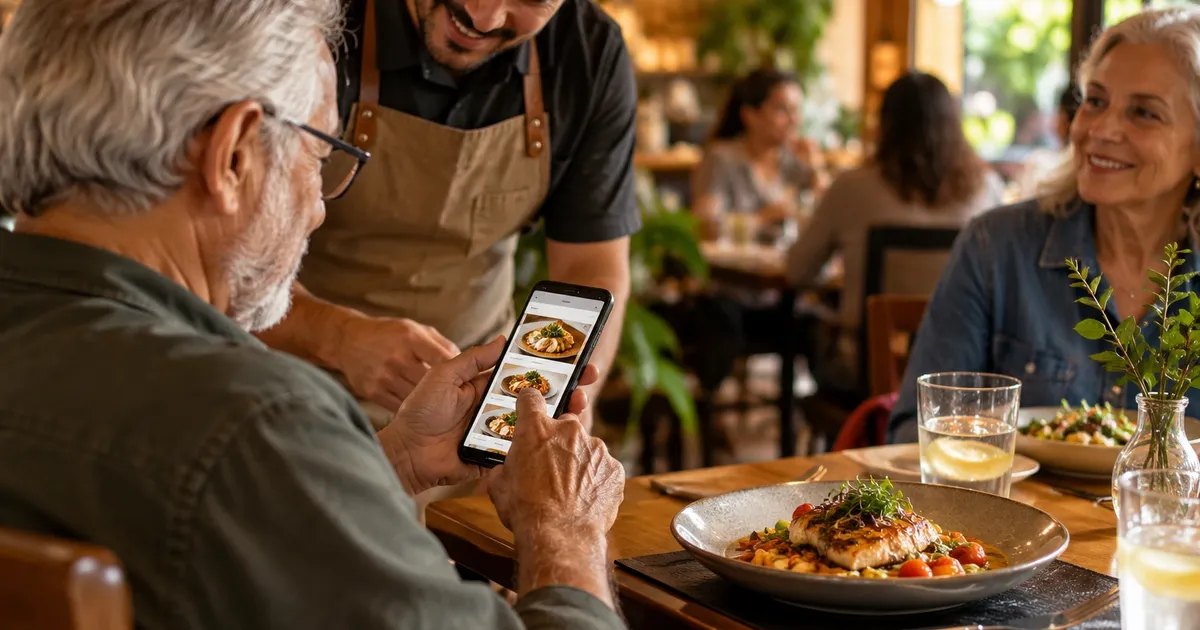
Long descriptions become tiring on a phone. Guests are holding the device, moving between categories and comparing dishes.
A digital menu should therefore favor short sentences, clear hierarchy and information that is easy to find.
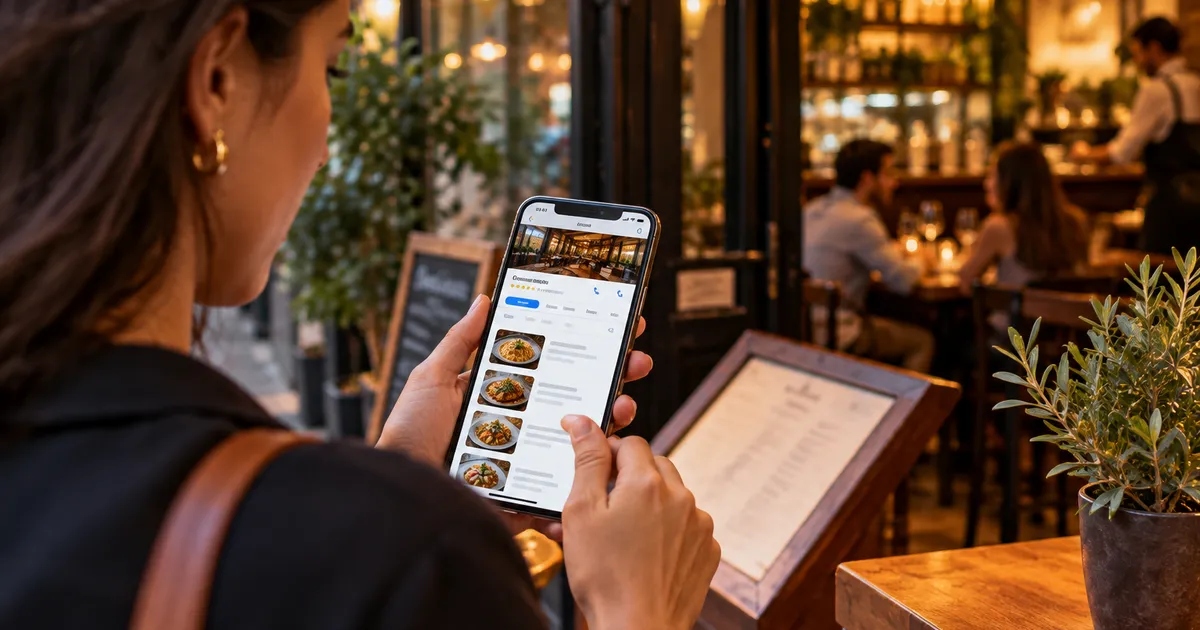
The QR code is only the entrance. After the scan, the menu needs to help guests decide without adding friction.
See how to improve the restaurant customer experience with a QR code menu.
How to write without inventing facts
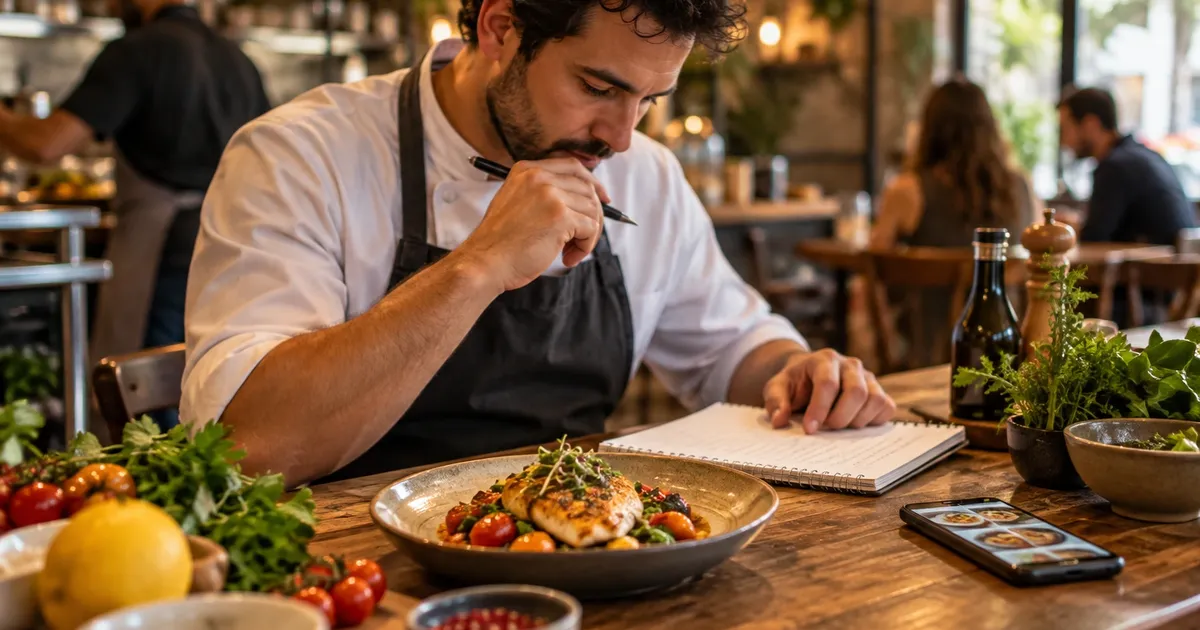
AI can produce a polished sentence in seconds. It can also invent ingredients, preparation methods, provenance or claims.
Use AI as a drafting assistant, not as the source of truth.
A safer workflow:
- List the real ingredients.
- Record the preparation method.
- List sauces and sides.
- Identify the genuine differentiator.
- Draft the description.
- Compare it with the kitchen specification.
- Verify important claims.
- Remove exaggeration.
- Publish.
- Review when the recipe changes.
If the kitchen cannot confirm a statement, it should not appear as a fact on the menu.
A 30-minute description audit
Start with 10 dishes:
- choose best sellers, high-margin dishes and dishes you want to sell more;
- mark generic adjectives, long text and outdated information;
- rewrite using ingredient + preparation + detail + side;
- read the descriptions aloud;
- publish and listen to staff questions and guest feedback.
You do not need to rewrite the entire menu in one afternoon.
How a digital menu makes this easier
With a printed menu, changing one description can mean editing a design file and printing again.
With a digital menu, the description becomes living content. That is useful when an ingredient changes, a seasonal dish arrives, a side is replaced or a translation needs correction.
See also how to create a free digital menu.
For the broader strategy, read how to create a restaurant menu that sells more.
FAQ
How long should a restaurant menu description be?
For many restaurants, 15–35 words is a useful starting range. The ideal length depends on the concept, the dish and the available space.
What should a menu description include?
Start with the hero ingredient, explain a relevant preparation method, and add one useful detail about flavor, texture, sides or provenance.
Should I use words like “delicious” and “amazing”?
Usually not. Specific ingredients and preparation details communicate more than generic praise.
Can I use AI to write menu descriptions?
Yes, as a drafting tool. Review every description against the actual recipe before publishing.
Should printed and digital descriptions be identical?
They should be consistent, but not necessarily identical. A digital menu can support a little more context as long as the important information remains aligned.