The Shame of a Menu Nobody Understands: How It Drives Away Foreign Customers
The tourist sits down, points at the plate at the next table, and orders fries because that's the only word he recognizes. A menu in his own language changes that whole scene.
The foreign customer sits down, opens the menu, and freezes. He doesn’t speak the language, the waiter doesn’t speak his, and what should be the simplest part of the meal, choosing what to eat, turns into a quiet embarrassment on both sides. He points at the dish on the next table. He orders fries because that’s the only word he recognizes. He hands the menu back with an awkward smile and leaves without tasting what your kitchen actually does best. That’s not a lack of curiosity on his part. It’s a menu that only exists in one language, charging you a price you never see land.
What actually happens when a customer can’t read the menu
A menu nobody understands doesn’t turn foreign customers away at the door, they’ve already walked in and sat down. The damage shows up later, at the table:
- They order less. When in doubt, people pick what they recognize: water, a soda, fries. Your most expensive dish never reaches the table of someone who didn’t understand its name.
- They order wrong. Without understanding the description, they gamble, and sometimes the gamble lands on shellfish for someone allergic, or pork for someone who doesn’t eat it.
- They don’t come back, and they tell whoever asks. “Menu was confusing, hard to order” is the kind of line that shows up in an online review, and it’s the first thing the next traveler reads before picking where to eat.
The embarrassment isn’t only theirs
Everyone focuses on the tourist who can’t read the menu, but the owner feels the same discomfort from the other side of the counter. Not fluent enough in English to explain a dish, no budget for a translator, and the waiter turns into an improvised interpreter mid-rush, describing a stew with his hands. Nobody walks away happy from that scene, not the person who ordered, not the person who tried to explain.
Pointing a phone camera at the menu doesn’t fix it
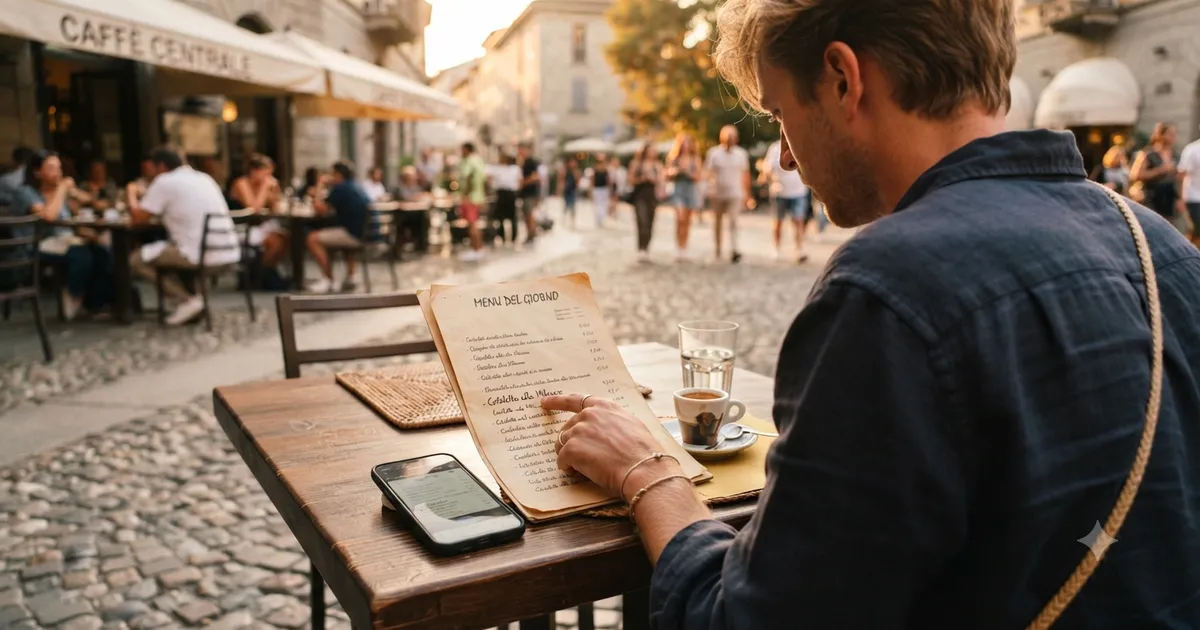
The usual workaround is the customer aiming a translation app at the paper menu. It sort of works, and the “sort of” is doing a lot of lifting: dish names come out literal, a regional stew becomes a string of nonsense words, “house style” confuses in any language. When the translation lands wrong, the frustration falls on your restaurant, not the app. The customer can’t tell if they read it right, and that doubt is the same embarrassment as before, just powered by his own phone.
A menu in more than one language takes that scene off the table
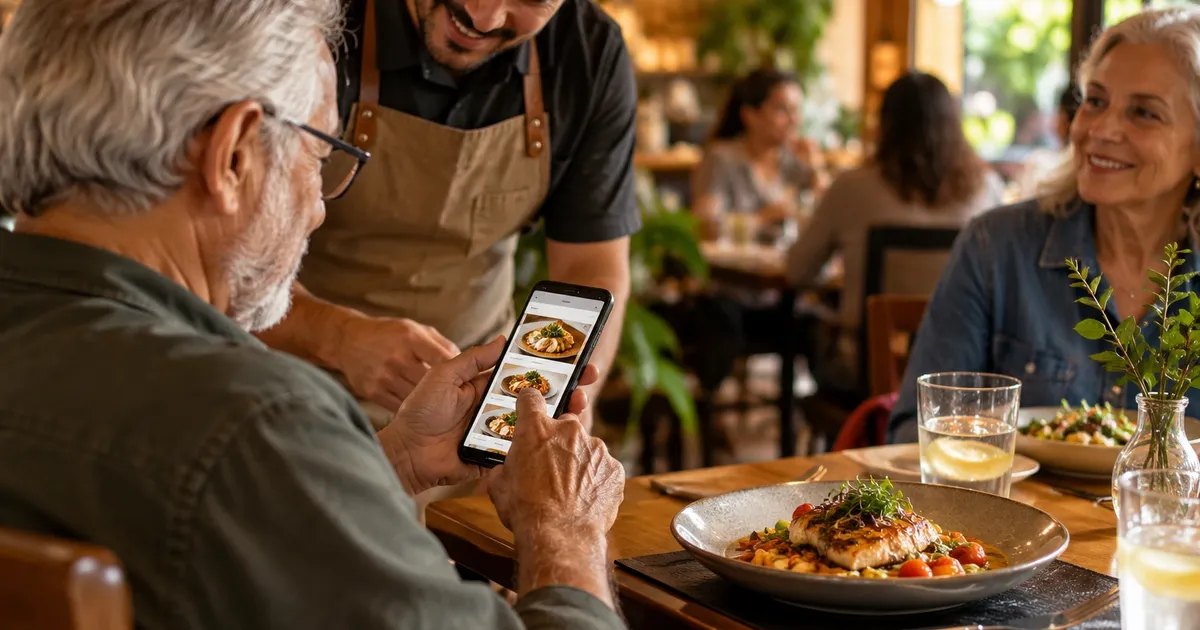
The fix isn’t the customer translating on the fly, it’s the menu arriving already written in his language. With a multilingual digital menu, the customer scans the QR code at the table, picks Spanish or Portuguese from a selector at the top, and reads a name and description you wrote, not one an app guessed at. The price doesn’t change between languages, only the text.
Qrdapio’s Pro plan exists for exactly this moment: a menu in English, Spanish, and Portuguese, with a language selector the customer switches on their own, no app to download. You write each dish once per language tab, at your own pace, and the Spanish version reads exactly the way you want that dish presented, with no automatic translation guessing mid-order.
Setting this up doesn’t require fluent English or a hired translator: a decent online translator handles the text, and you review it before publishing. It’s one round of work, dish by dish, not a scramble every time a foreign customer sits down.
If your restaurant only sees the occasional tourist, a free digital menu already covers the basics in one language, and you turn on the others when it makes sense. If foreign guests are a constant, like at a bed-and-breakfast or hotel, it’s worth seeing how this plays out in a multilingual digital menu for hotels.
Quick answers
Why do foreign customers order less at my restaurant? Because they only recognize a few words on the menu and avoid gambling on a dish they don’t understand. A menu in their language removes that barrier, and they go back to ordering what they actually want.
Do I need to speak Spanish to build a Spanish menu? No. You write the dish name and description, review it with an online translator, and the text stays saved the way you approved it. It’s not a live translation running every time someone scans.
How many languages can a digital menu have? With Qrdapio, English, Spanish, and Portuguese. Spanish covers the largest group of non-English-speaking customers in most US markets, and Portuguese reaches Brazilian travelers.
Does the customer need to download an app to switch languages? No. They scan the QR code, the menu opens in their phone’s browser, and the language selector is already sitting at the top of the page.
Does this only make sense for restaurants in tourist areas? It makes sense for any restaurant that sees the occasional foreign customer, even outside a tourist spot. It only takes one wrong order a week for it to pay for itself.